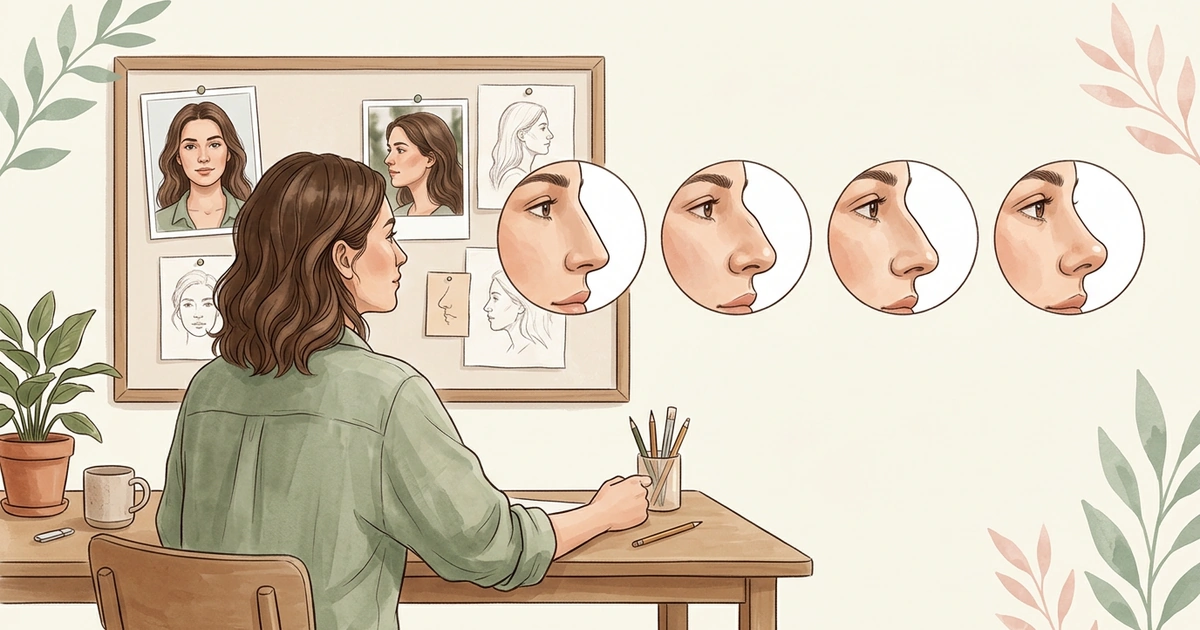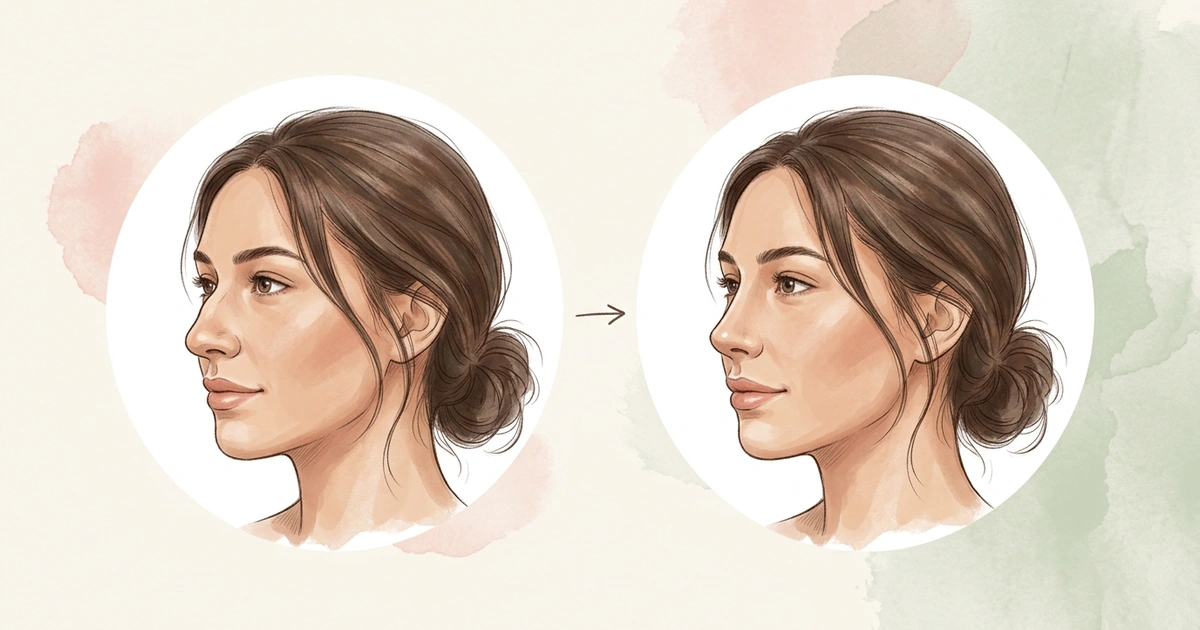
Parts of the Nose: Names of Each Part Explained
You want to describe your nose, or understand what a surgeon just said, and the only word you know is “bridge.” The parts of the nose have simple names. Once you know them, you can say exactly which part you mean.
Written by Mia Hartley6 min readUpdated
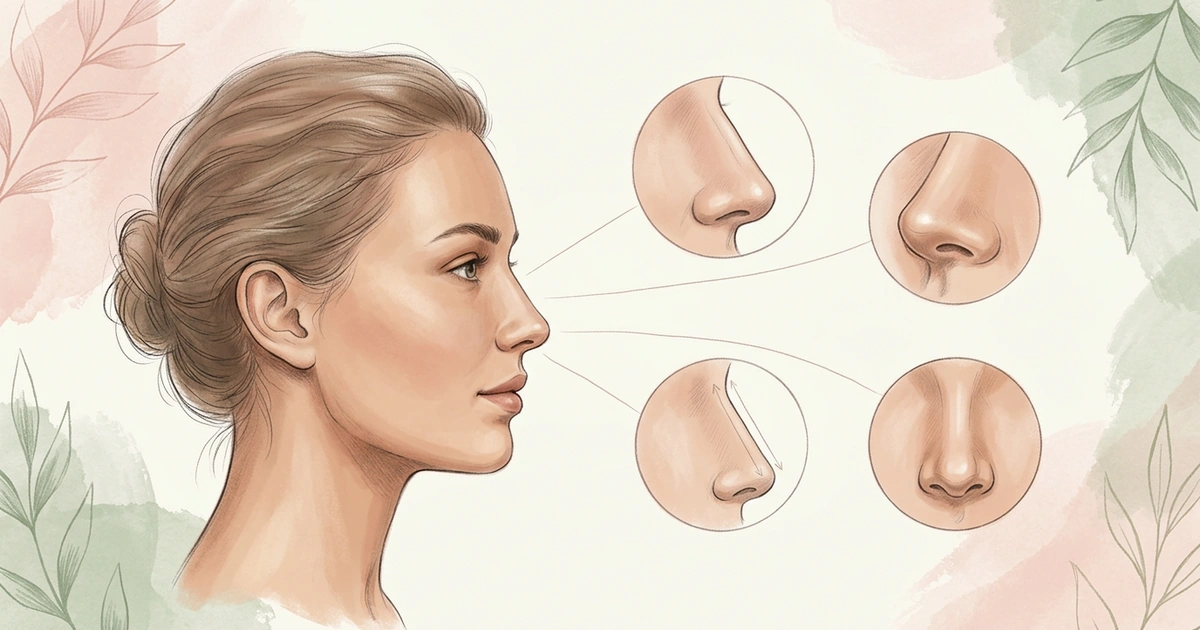
Run a finger from between your eyes down to the tip of your nose. At the top, it feels hard and doesn’t move. Lower down, it gets softer and bends a little when you press.
That change from hard to soft is an easy map of your nose. Every part below sits somewhere along it.
Your nose has 6 parts you can see: the root between your eyes, the bridge down the middle, the tip, the columella (the strip between your nostrils), the wings around each nostril, and the nostrils. Inside, a wall called the septum splits it in two. The top of your nose is bone, and the lower part is softer cartilage.
Names of the Parts of the Nose
Your nose has 6 parts you can see from the outside. From top to bottom:
- Root: the top, between your eyes, just below your brows.
- Bridge: the raised line down the middle of your nose, from the root to the tip.
- Tip: the end of the bridge, usually the part that sticks out most.
- Columella: the narrow strip between your nostrils.
- Wings: the curved sides around each nostril. Doctors call them alae.
- Nostrils: the two openings at the bottom.
Inside, a wall called the septum splits your nose into two air passages, one behind each nostril.
What Is the Top of the Nose Called?
It’s called the root. Many people call it the bridge too, and that mix-up confuses people more than any other nose word.
The bridge is the line down the middle of your nose, from the root to the tip. Doctors also call it the dorsum or the nasal ridge. When someone says a nose is straight or has a bump, they mean the bridge.
This matters when you talk about changes. “A slimmer bridge” can mean a narrower top between your eyes, or a smoother line down the middle. Those are two different changes, so say which one you mean.
What Is the Part Between Your Nostrils Called?
The bit between your nostrils is called the columella. It’s the strip that separates your two nostrils. You’ll most likely hear the word from a surgeon, because it’s where an open nose job starts.
In an open nose job, the surgeon makes a small cut across the columella. In a closed one, all the cuts stay inside the nose. If it comes up at a consultation, ask which one your surgeon plans.
The columella is cartilage covered by skin. That’s why it bends a little when you gently pinch it.
What Is Your Nose Made Of? Bone, Cartilage, and Skin
Your nose is made of bone at the top, cartilage lower down, and skin over both. Cartilage is the firm but bendy tissue that also shapes your ears. Where the hard part turns soft under your finger is where the bone ends.
The root and the top half of the bridge are bone. The lower bridge, the tip, the wings and the columella are cartilage. The septum inside is part bone, part cartilage.
Skin covers it all, and some people have thicker skin than others. That’s one reason two noses with a similar shape underneath can still look different.
Which Part Shapes What You See
Most things people notice about a nose come from one part. A bump comes from the bridge. A rounded tip comes from the tip. A wide bottom comes from the wings and where they meet your cheeks.
Each one is easiest to see from one angle. A bump shows from the side. The tip shape and the width show from the front. So a front photo and a side photo tell you more than a mirror does.
How to Describe Your Nose to a Surgeon
Say 3 things: which part, from which angle, and what change you want. That tells a surgeon exactly where to look.
Without the words, it often comes out as “just… smaller,” and a lot of pointing. With them, it sounds like this: “From the side, I’d like a smoother bridge. From the front, a slightly narrower tip. I’m happy with my nostrils.”
Also say what you want to keep. That rules out changes you don’t want and keeps the talk on the part you came for.
Where NoseChic Fits In
Before you talk to anyone, it helps to know which part of your nose stands out most. NoseChic’s Nose Report rates the parts from this guide using one photo. It rates the bridge (Bridge width and Bridge smoothness), the tip (Tip shape and Tip angle), the Length from the top of your nose to the tip, and Symmetry, which is how evenly the two sides line up.
Then you can see a change instead of describing it. Slim shows a narrower bridge and tip from the front. Greek shows a straighter bridge from the side. Button shows a smaller, rounded tip. With a simulation on your phone, you can show a surgeon what you mean instead of explaining it with your hands.
The ratings come from a photo, so they can’t feel the bone and cartilage underneath. When you show a simulation to a surgeon, ask which parts the change would involve.
Frequently Asked Questions
What are the parts of the nose and their functions?
The outside parts, from the root to the nostrils, give your nose its shape and let air in. Inside, your nose warms and cleans the air you breathe. Tiny hairs called cilia catch dirt and dust. Your nose also gives you your sense of smell.
What is the inside of the nose called?
The space inside is called the nasal cavity. A wall of bone and cartilage, the septum, splits it into two air passages, one behind each nostril. Along the sides are folds called turbinates. They warm the air and add moisture to it after you breathe in.
What is the tip of the nose called?
It’s simply called the nasal tip. It’s the point where the bridge ends and meets the columella, the strip between your nostrils. Whether your tip points up or down is easiest to see from the side.
What if a surgeon uses a word I don’t know?
Ask them to point to it on your face or your photo. That’s a normal question, and it stops you from agreeing to a change you pictured differently. Two words you’ll likely hear are tip projection, which is how far your tip sticks out from your face, and tip rotation, which is how much it points up or down.
Sources and further reading
- Anatomy of the Nose (Elements of Morphology, National Human Genome Research Institute (NIH))
- Nose: Anatomy, Function and Related Conditions (Cleveland Clinic)
- Rhinoplasty Procedure Steps (American Society of Plastic Surgeons)
See your new nose in seconds
Download NoseChic, try nose job simulation on your own photo, and find the nose that feels right.